Signed in as:
filler@godaddy.com

Experience Early Learning Curriculum, formerly known as "Mother Goose," is a research-based early childhood curriculum that integrates 35 skills into playful learning experiences. It aims to support children's development across various domains, including social-emotional, physical, language, and cognitive areas, through hands-on activities, games, and projects. The curriculum is designed to be flexible and adaptable to different learning environments and developmental levels, with options for infants, toddlers, and preschoolers.
The Experience Early Learning Curriculum is designed to align with early learning standards across all 50 states, Head Start guidelines, and the National Association for the Education of Young Children (NAEYC). Experience Curriculum is also fully integrated with the Brightwheel childcare app.
To learn more about Experience Early Learning Curriculum, please visit: https://www.mothergoosetime.com/
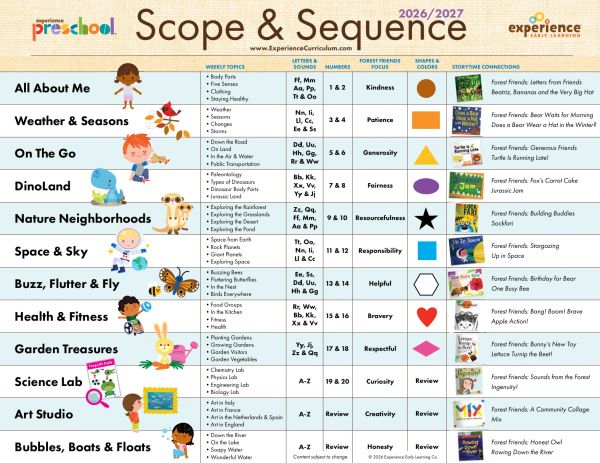
At TCS, each class utilizes the Experience Early Learning Curriculum to build their foundational knowledge before attending Kindergarten. Each month has a main theme and weekly topics with letters, colors, shapes, and character traits they will learn.
In addition to the curriculum, the students in each classroom practice handwriting/fine motor skills, primary sign language, and Spanish.

Children will develop problem-solving and critical thinking skills through hands-on learning experiences. This includes exploring letters, colors, shapes, numbers, patterns, and engaging in activities that encourage reasoning and exploration.
Children will expand their vocabulary, engage in conversations, and develop early literacy skills through books, storytelling, music, and interactive group activities.
Children will build self-confidence, learn to express emotions appropriately, and develop positive relationships with peers and teachers through structured routines and cooperative play.
Children will strengthen both fine and gross motor skills through activities such as handwriting practice, movement, outdoor play, and hands-on learning experiences.
Children will explore creativity through art, music, and sensory activities. Students will also be introduced to primary sign language and Spanish to enhance communication and cultural awareness.
Children will build foundational academic and social skills necessary for a successful transition to Kindergarten through structured themes, weekly learning topics, and consistent academic engagement.
Student progress is monitored throughout the school year using developmental milestone checklists and academic assessments conducted at the beginning, middle, and end of the academic year.